
2 hr
Alajuela Coffee Plantation Tour with Tasting
Journey through a working Costa Rican coffee estate with tastings, garden access, and roasting room visits
Reserve
Hand-picked by our editors — only the best 5 experiences from 23 reviewed.
Verified partners for every tour, free cancellation where available, and instant confirmation on every booking.
2 hr
Journey through a working Costa Rican coffee estate with tastings, garden access, and roasting room visits
Reserve
2 hr 30 min
Discover bean-to-cup traditions on a family farm near Arenal Volcano with tastings and hands-on activities
Reserve
2 hr
Explore Costa Rica's sweet treasures: native stingless bees, cacao groves, and artisan coffee production.
ReservePrices from verified partners. Availability updates in real time at checkout. Free cancellation policies apply where shown.
The landmarks, rooms, and views travelers on this tour remember — all visible on a single visit.
Witness how coffee beans are spread out to dry in the sun on these traditional concrete patios
Coffee Patios Doka
Explore the historic machinery used to process coffee cherries in the traditional wet milling process
Wet Mill Machinery
Walk through rows of shade-grown coffee plants to understand the cultivation process
Coffee Plant Rows
Experience a professional tasting where you learn to distinguish flavor notes and acidity
Coffee Cupping Session
Stroll through the lush ornamental gardens that surround the production facilities
Lush Tropical Gardens
Doka Estate provides an immersive, historical agricultural experience, while the Britt Coffee Tour centers on theatrical production insights and professional cupping techniques.
| Feature | Top pick Doka Estate | Britt Coffee Tour |
|---|---|---|
Experience Type |
Historic working plantation | |
Focus |
Traditional cultivation and milling | Processing and international roasting standards |
Setting |
Active estate in Alajuela Province | Commercial facility with landscaped gardens |
Duration |
Approx. 2 hours | 1.5–2 hours |
Tasting Inclusions |
Professional coffee and snack tasting | Guided cupping and chocolate pairing |
Accessibility |
Ground-level paths with moderate terrain | Fully paved and wheelchair accessible |
| See tickets → |
Verdict: Choose the alajuela coffee plantation guided tour with tasting for an authentic look at harvesting, or select Britt for a highly polished, interactive demonstration that includes specific alajuela coffee plantation guided tour with tasting tickets benefits like diverse flavor profiles.
Choose your ticket, select your date, and reserve in under two minutes. Secure checkout handled by our verified partner.
Instant confirmation by email, with a mobile voucher you can save offline. No printing, no queuing at a collection desk.
Arrive at the entrance, show your voucher on your phone, and walk in. Most tickets include priority or skip-the-line access.
Practical details for your visit straight from our verified partners — hours, access, rules, and how to get there.
Doka Estate, Alajuela
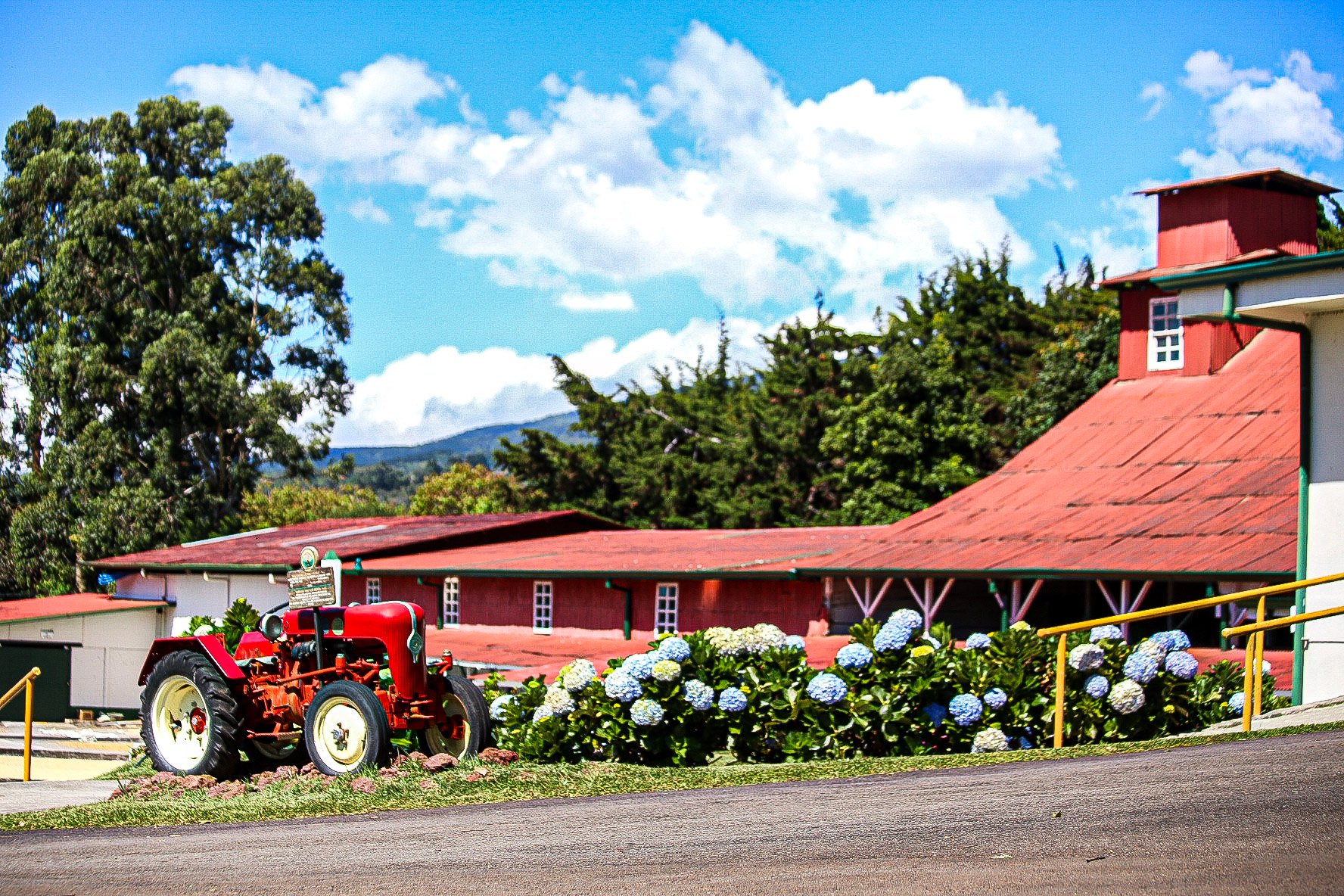
Main entrance of the coffee plantation
Follow the main road from Alajuela center toward Poás Volcano and watch for Doka Estate signs.
Casual and comfortable clothing is recommended for the alajuela coffee plantation guided tour with tasting. Wear sturdy walking shoes suitable for gravel paths and uneven terrain.
Small backpacks are permitted during the alajuela coffee plantation guided tour with tasting. All bags may be subject to visual inspection by security staff at the entrance.
Photography is encouraged throughout the grounds and during the alajuela coffee plantation guided tour with tasting. Professional tripod use requires prior authorization from the estate management.
The main visitor areas of this Costa Rican coffee farm are designed to be accessible. Please inform your guide if you require assistance during the alajuela coffee plantation guided tour with tasting.
The alajuela coffee plantation guided tour with tasting is suitable for families with children. Educational components provide an engaging experience for younger visitors interested in agriculture.
The onsite restaurant serves authentic local cuisine and fresh coffee. Tasting experiences are included in your 60 USD alajuela coffee plantation guided tour with tasting admission.
Best time to go, insider tips, nearby landmarks, and the cancellation fine print — flip through to skim what matters to you.
How crowds, weather, and events shift across the year.
Mild temperatures make this a pleasant time for walking the rows of coffee shrubs.
Small details that turn a good visit into a great one.
Drink plenty of water before starting your alajuela coffee plantation guided tour with tasting, as humidity can rise at midday.
Non-bookable sights within a short walk — free to visit, easy to pair.
An active volcano with a stunning crater lake and walking paths.
Flexible, no hidden fees.
Full refunds are available for cancellations made at least 24 hours before the scheduled time. The entrance fee of 60 USD per person is non-refundable for no-shows.
Hand-picked options within walking distance — pick a district for vibe, or a specific hotel for convenience.
Hilltop hotel with sweeping views of the Central Valley.
Doka Estate has processed arabica cherries on the same Central Valley slopes since 1931, making it one of Costa Rica's oldest continuously operating mills still open to visitors. The hacienda sits at 1,200 meters on volcanic soil that drains quickly after afternoon rains, a geographic advantage that shaped the country's export economy for a century. What began as a family operation now maintains original water-powered machinery alongside modern wet-processing stations, offering a rare side-by-side comparison of technique evolution. The estate's significance extends beyond its age. Costa Rica banned robusta cultivation in 1989 to protect its reputation for washed arabica, and Doka's terroir produces beans with the bright acidity and citrus notes that define the Alajuela growing region. The farm's three-hour alajuela coffee plantation guided tour with tasting walks visitors through the full post-harvest chain: depulping, fermentation, drying patios where workers rake beans in geometric patterns, and finally the roasting drum that brings out varietal character. Guides explain how altitude, shade cover, and processing method converge to produce cup profiles, a level of granularity missing from commodity tours. The tasting component uses formal cupping protocol borrowed from buyer evaluations. Visitors slurp cooled coffee from shallow bowls to aerate the liquid across the palate, isolating flavors that disappear in standard brewing. The sensory training distinguishes Doka from plantations that conclude with espresso service and call it education. Participants compare three single-origin lots side by side, learning to identify the papaya-honey sweetness of Caturra versus the darker chocolate tones of Catuaí. Doka's architecture remains modest—whitewashed drying platforms, corrugated roofs, open-air sorting tables—but the infrastructure tells Costa Rica's agrarian history more honestly than renovated showpieces. The estate supplied European markets before air freight existed, shipping green beans by rail to Puntarenas and onward by steamship. That export legacy persists: roughly 60 percent of Doka's annual harvest still leaves the country, while the remainder supplies the on-site café and retail operation where alajuela coffee plantation guided tour with tasting tickets include a small bag of roasted beans.
"Costa Rica banned robusta cultivation in 1989 to protect its reputation for washed arabica."
A step-by-step walkthrough of the visit — what you'll see, how long each stage takes, and the details that matter.
You arrive at Doka Estate's entrance off the Alajuela-Grecia road, where morning mist still clings to the coffee rows climbing the hillside. A guide leads your small group past flowering trees that provide shade canopy, explaining how the estate hand-picks only ripe red cherries during the October-to-February harvest window. You pause at the depulping station, watching yesterday's pickings tumble through mechanical rollers that strip fruit flesh in seconds, the sweet pulp diverted to compost beds while mucilage-covered beans drop into fermentation tanks. The wet mill's concrete channels carry a steady flow of mountain runoff used to wash fermented beans, a process Doka has refined over nine decades. You walk onto sun-drying patios where workers rake parchment coffee in slow arcs, aerating the beans to achieve even moisture content before hulling. The guide invites you to handle samples at different drying stages, demonstrating the texture shift from spongy to brittle as water content drops from 55 percent to 11 percent over two weeks. Inside the cupping lab, you're seated at a semicircular table laid with identical white bowls, each holding freshly ground coffee from a different estate lot. The guide demonstrates proper slurping technique, and you taste three profiles in sequence, noting how the first tastes of apricot and jasmine while the third carries burnt-sugar depth. The alajuela coffee plantation guided tour with tasting concludes at the retail counter, where your included bag of roasted beans carries the same lot number you cupped minutes earlier.
The estate is open from 08:30–16:30 every day of the week.
Yes, this alajuela coffee plantation guided tour with tasting is educational and welcoming for families.
It is highly recommended to book your alajuela coffee plantation guided tour with tasting tickets in advance to ensure availability.
The 60 USD entrance fee covers the comprehensive guided tour and a professional coffee tasting session.
Yes, secure storage is available at the entrance for guests on an alajuela coffee plantation guided tour with tasting.
Wear comfortable, casual clothing and sturdy closed-toe shoes for walking on uneven terrain.
Photography is encouraged, though professional filming equipment requires special permission at the Doka Estate.
Cancellations made at least 24 hours in advance are eligible for a full refund of your alajuela coffee plantation guided tour with tasting booking.
Most pathways at the Doka Estate are accessible, though some sections of the plantation have natural terrain.
Yes, the Doka Estate provides ample parking for visitors arriving by car.